
Upper and Lower Case
One of the most confusing things about learning English is that there are a lot of exceptions. Not just spelling and pronunciation but also the shapes of the upper and lower case letters.
There are 17 letters where the upper and lower case letters vary by size, but are pretty similar in shape.
But 9 letters are pretty random - the upper and lower case letter shapes have little in common. In fact some lowercase letters bear more shape similarity to capitals other than their own. b & d are closer in shape to P than to B or D.
This creates extra steps for the brain. If A and a are the same, what does that mean? They don’t look the same. Therefore we have to construct a third version in our heads - the concept of the letter a, independent of the shape, and to which both shapes attach. And this is further complicated by the multiple sounds that attach to the letter a.
Ugh.
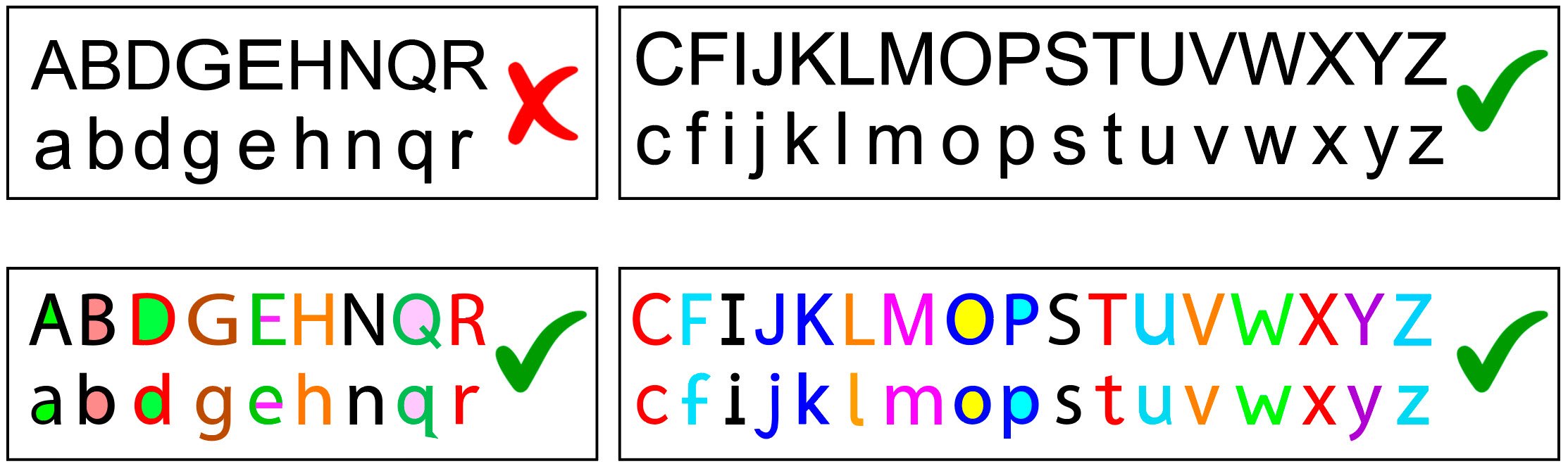
RexLex is adding dimensions, and this provides the opportunity to create additional order - We can align upper and lower case letters with the new dimensions so that they can be connected by something seen rather than unseen. This means that it’s fewer steps for the brain to establish their connection.