
Jeffrey Varasano,
Founder & Designer

Career Highlights:
Rubik’s Cube Record
Jeff was the first world record holder, at age 15, for the Rubik's Cube: 24.67 seconds on Oct 3, 1981
He appeared on shows such as The Tonight Show with Johnny Carson, The Merv Griffin Show, That's Incredible and Good Morning America.
Author, Jeff Conquers the Cube. Written at age 14, it was the first book ever published on speed cubing and sold 200,000 copies.
Yale University, 1988, BA in economics, minor in computer science.
Software Engineer, 15 years including a past partnership with GA Tech’s Atlanta Technology Development Center (ATDC). His startup, Think2020, Inc., developed frameworks using C++ and SQL for simplifying otherwise complex data management systems.
Pizza:
In 2006 his web page for how to make pizza went viral and quickly became the #1 pizza site on the internet for the next 10 years.
The NY Times called him the Pizza MacGyver and since 2009 his restaurant, Varasano's Pizzeria, has been acclaimed as one of the nation's best by CNN, NPR, USA Today, FoxNews, Gourmet Magazine, and many more.
His Buckhead restaurant currently has one of the highest Google Reviews of any pizzeria in the USA (4.9 with 2850 reviews).
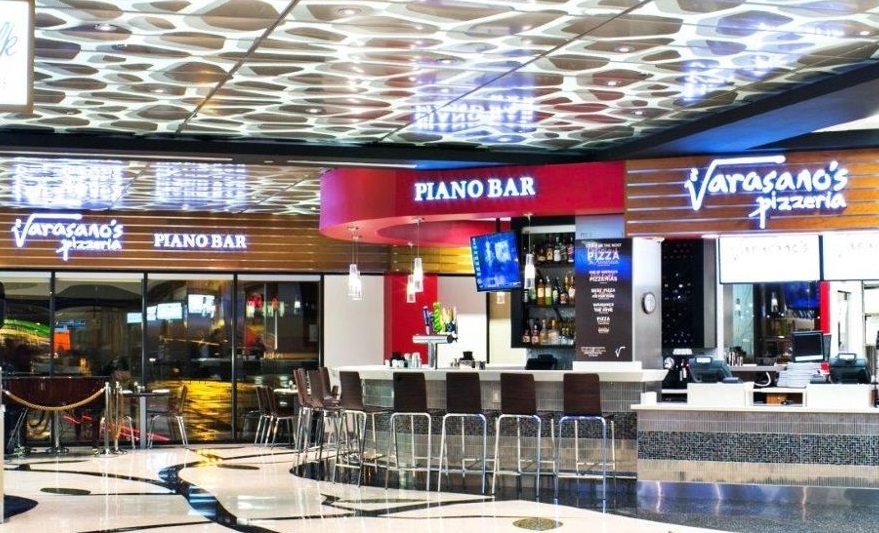
His restaurant and bar at the center of Delta’s terminal at Hartsfield-Jackson Airport has greeted people to Atlanta since 2013 and was on Condé Nast Traveler's list of the top 25 airport restaurants in the world.
Mastery: In 2009 he was invited by Google to give a Google Tech Talk, “Pizza, Software and the Rubik’s Cube” on what we can learn from the process of mastery itself, regardless of the domain being studied.
Dyslexia: His work on Artificial Intelligence and methods of identifying images led to the understanding of how minor tuning of such systems could cause errors in ways that are similar to dyslexia. In 2024 he received a patent for the process of analyzing and converting writing systems to a more dyslexia-friendly coloring standard.
The patent includes processes for treating shape similarity, glyph variations, allograph sets (such as upper and lower case), diacritical marks, letter pairs, multi-color letters, color blindness, glyph frequency analysis, brightness contrast analysis, word spacing, line spacing, and line separators.
Analyzed multiple orthographies in preparation for the development of international color standards. This includes multiple styles of writing systems, such as:
Alphabetic - Latin, Greek, Hangul and Cyrillic
Abjads - Hebrew and Arabic
Logographs - Chinese (Hanzi) & Japanese (Kana)
Developed RexLex font for the Latin Character System